
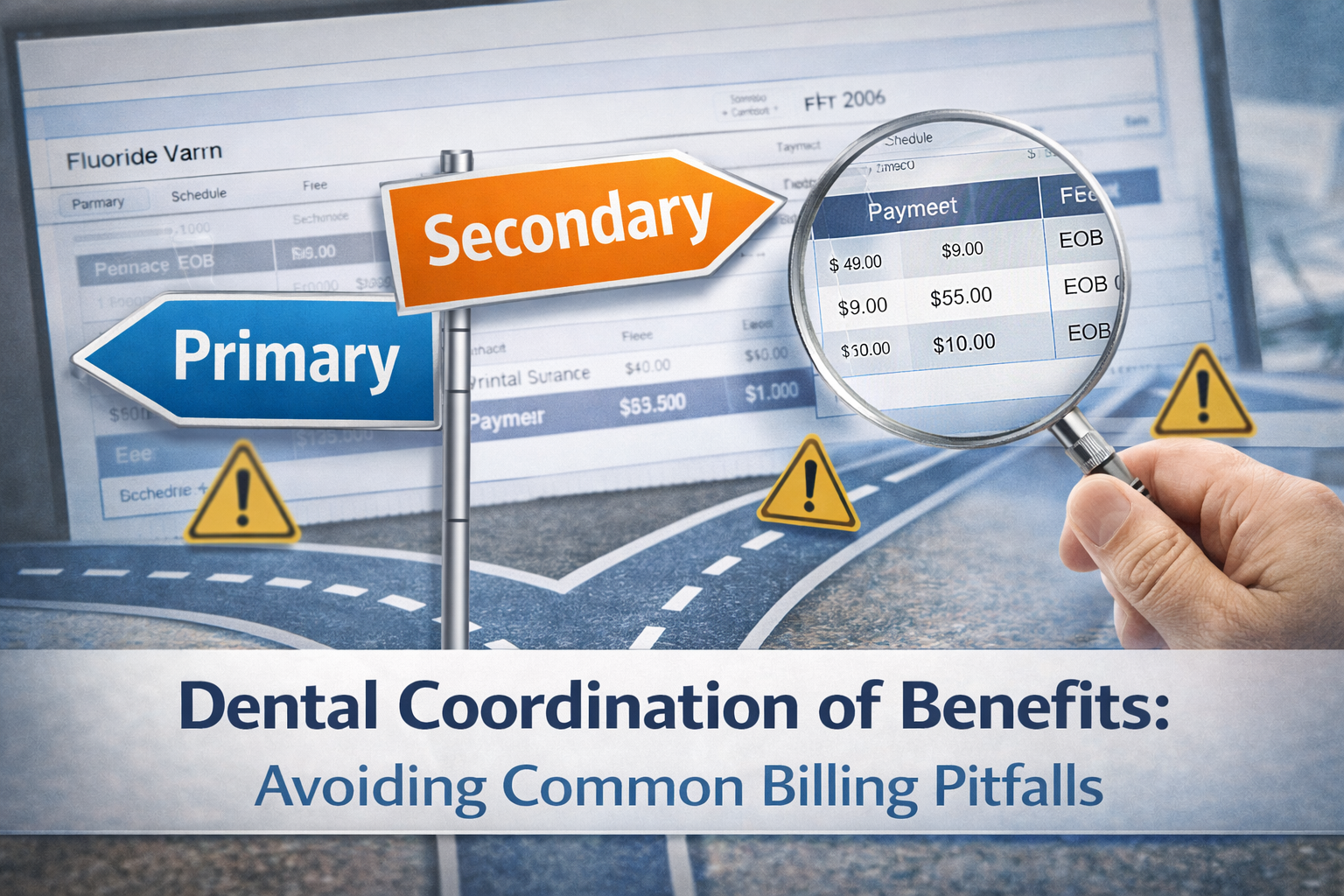
Insurance billing can be one of the most complex parts of running a dental practice, and Coordination of Benefits (COB) is often where mistakes happen most frequently.
In fact, one of the most common issues we see when reviewing accounts is incorrect COB adjustments. These errors can create inaccurate balances, incorrect credits, and in some cases even cause practices to lose revenue.
Many billers learn insurance workflows informally—often from someone who was also self-taught. Over time, incorrect methods get passed down and become the standard in an office even though the calculations may not be accurate.
Understanding how Coordination of Benefits actually works can make a significant difference in maintaining accurate accounts and protecting your practice’s revenue.
Understanding Coordination of Benefits
Coordination of Benefits occurs when a patient has more than one dental insurance plan.
In these situations:
- The primary insurance plan processes the claim first.
- The secondary insurance plan processes the remaining balance based on its coordination rules.
The goal of COB is to ensure the total payment from both insurance companies does not exceed the allowable amount determined by the plans.
However, the way this calculation happens can vary depending on the state and plan rules, which is where many mistakes occur.
Low Fee Schedule vs High Fee Schedule States
One critical factor that affects COB calculations is whether a state follows Low Fee Schedule Coordination or High Fee Schedule Coordination.
Low Fee Schedule Coordination
In a Low Fee Schedule state, the adjustment is based off the lowest fees between both fee schedules.
High Fee Schedule Coordination
In High Fee Schedule states, the adjustment is based off the highest fees between both fee schedules.
Understanding which method applies is critical because the calculation must account for both fee schedules on a per code basis.
A Common Billing Mistake
One of the most frequent errors we see is when billers calculate adjustments using only one fee schedule.
For example:
• Adjusting solely based on the primary insurance allowable
• Adjusting solely based on the secondary insurance allowable
Both of these approaches can lead to incorrect account adjustments.
Proper COB calculation requires evaluating both fee schedules together to determine the correct remaining allowable amount.
The Overpayment Misconception
Another common misunderstanding involves overpayments.
Many billers assume that if an insurance payment is higher than the plan’s allowable amount, it automatically means an overpayment occurred.
However, that is not always the case.
Insurance payments may appear higher than expected due to:
• Coordination of Benefits calculations
• Plan provisions
• deductible differences
• remaining annual benefits
Automatically applying adjustments without reviewing the full calculation can create incorrect account credits or cause practices to refund money unnecessarily.
Why Accurate COB Matters
When Coordination of Benefits is calculated incorrectly, it can lead to several issues:
• Incorrect patient balances
• Credits appearing on accounts when they shouldn’t exist
• Missed revenue opportunities
• Time spent correcting account errors later
For busy practices, these issues can quietly accumulate over time.
The Value of Proper Insurance Review
Because COB rules can vary between plans and states, accurate coordination requires careful review of:
• primary plan fee schedules
• secondary plan fee schedules
• explanation of benefits (EOB) details
• state coordination guidelines
Taking the time to ensure COB calculations are correct helps maintain accurate accounts and predictable revenue flow.
Final Thoughts
Coordination of Benefits is one of the most misunderstood aspects of dental insurance billing, yet it plays a critical role in maintaining accurate financial records within a practice.
When calculated correctly, COB ensures that insurance payments are applied properly and accounts remain balanced.
If your practice has ever questioned whether your coordination adjustments are being handled correctly, it may be worth reviewing your current billing workflows.
Steadfast Billing Solutions works with dental practices to ensure insurance claims, coordination calculations, and billing processes are handled accurately so offices can focus on patient care while maintaining healthy revenue cycles.
Related Posts
In-House Billing vs Outsourced Dental Billing: What Practices Should Know

The Impact of Outsourcing Dental Insurance Billing on Practice Efficiency: A Comprehensive Analysis of Benefits and Best Practices for Dental Offices