
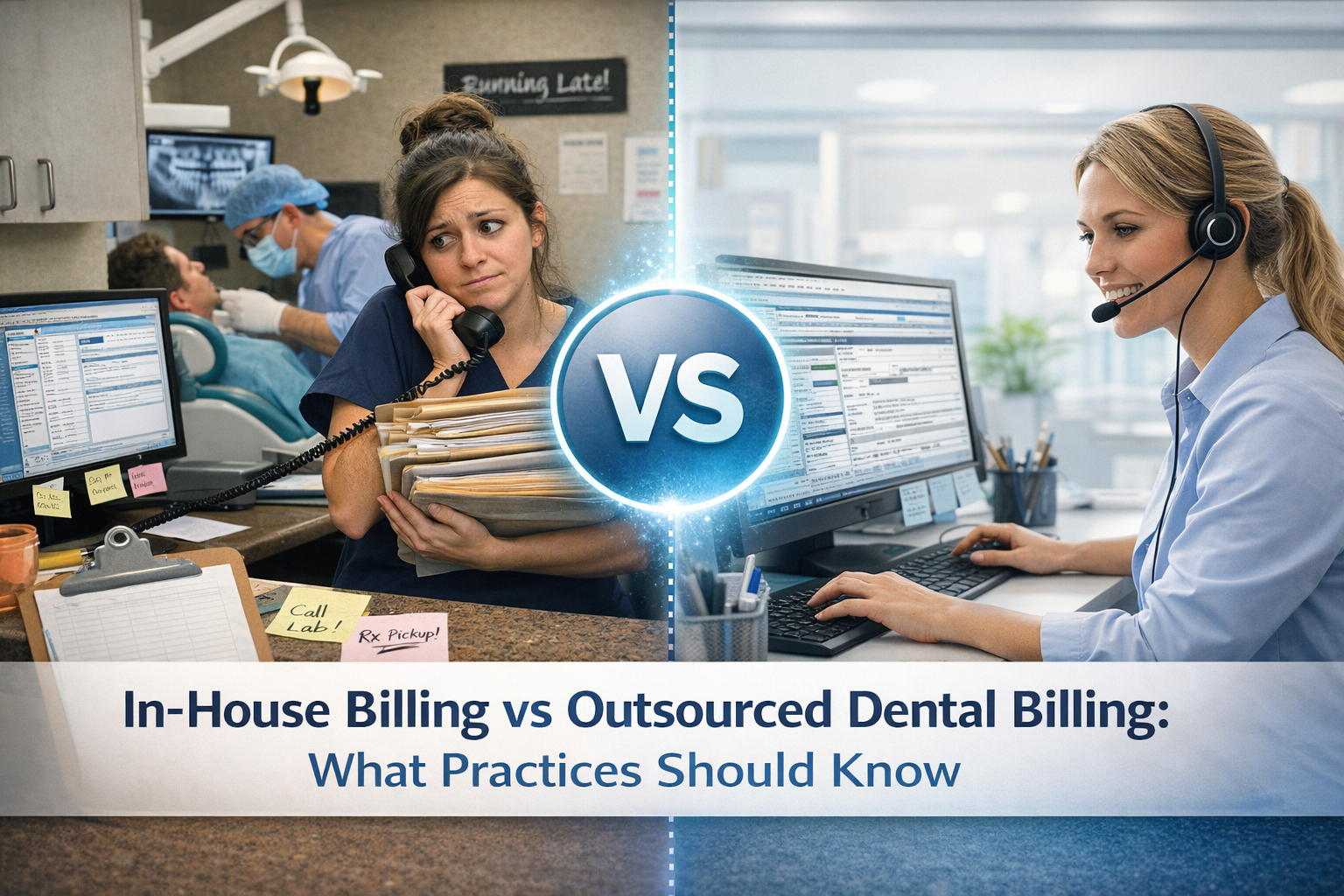
Insurance billing plays a critical role in the financial health of a dental practice. Claims must be submitted correctly, follow-ups need to be consistent, and insurance payments must be interpreted accurately to maintain proper patient balances.
For many practices, this responsibility falls on an in-house team member. However, as insurance processes become more complex, many offices are beginning to consider outsourced dental billing support.
Understanding the differences between in-house billing and outsourced dental billing can help practices determine which approach best supports their workflow and financial goals.
How In-House Billing Typically Works
In many dental practices, billing responsibilities are handled by a front office team member. These individuals often manage several roles simultaneously, including:
• patient check-in and scheduling
• treatment coordination
• answering phones
• financial arrangements
• insurance claim submission and follow-up
While this structure works for some practices, insurance billing can quickly become time-consuming. Claims that require additional documentation, appeals, or repeated follow-up calls may compete with the daily demands of the front desk.
When this happens, insurance follow-up may unintentionally become delayed, allowing claims to age beyond 60 or 90 days.
Common Challenges With In-House Billing
Front office teams are essential to the patient experience, but insurance billing often requires dedicated time and focus.
Some common challenges practices encounter with in-house billing include:
Limited time for insurance follow-up
When staff members are managing patient flow and administrative tasks, insurance calls and claim reviews may get pushed aside.
Insurance rules and coordination complexities
Topics like coordination of benefits, fee schedules, and insurance adjustments require a deep understanding of how plans process claims.
Training and knowledge gaps
Many billers learn insurance workflows informally, which can lead to inconsistent billing practices over time.
Aging insurance claims
Without consistent follow-up systems, claims can sit unpaid for extended periods, creating delays in revenue.
What Outsourced Dental Billing Looks Like
Outsourcing dental billing allows practices to work with a team that focuses specifically on insurance management.
Rather than relying on one person within the office, an external billing partner manages tasks such as:
• insurance claim submission
• claim follow-up and status tracking
• coordination of benefits calculations
• appeals and resubmissions
• payment posting support
• identifying aging accounts
Because billing teams focus exclusively on insurance processes, they often have the time and structure needed to maintain consistent follow-up on outstanding claims.
Benefits of Outsourcing Dental Billing
For many practices, outsourcing billing is less about replacing the front office and more about supporting the team with dedicated insurance expertise.
Some of the benefits practices often experience include:
More Consistent Claim Follow-Up
Insurance follow-up requires persistence and organization. A dedicated billing team can ensure claims are reviewed and followed up on regularly so they do not quietly age without resolution.
Reduced Administrative Burden
Front office teams can focus on patient interactions, scheduling, and treatment coordination rather than spending hours navigating insurance phone systems.
Greater Insurance Billing Expertise
Billing professionals who work specifically with insurance claims often develop a deeper understanding of topics such as:
• coordination of benefits calculations
• insurance fee schedules
• documentation requirements
• appeal strategies
Improved Visibility Into Insurance Aging
With structured billing workflows, practices often gain better insight into their insurance aging reports and claim status.
Is Outsourced Billing Right for Every Practice?
Outsourcing billing is not the right solution for every office. Some practices have well-established internal billing teams and processes that work effectively.
However, many offices find that as insurance requirements become more complex, having dedicated support for billing and claims management helps maintain consistent revenue flow.
The decision often depends on factors such as:
• claim volume
• staffing availability
• time spent on insurance follow-up
• comfort level with insurance processes
A Collaborative Approach
Outsourced billing does not replace the role of a practice’s front office team. Instead, it can function as an extension of the practice, working alongside the office to ensure insurance claims are submitted accurately and followed up on consistently.
When insurance workflows are organized and claims receive the attention they require, practices often experience fewer delays and clearer financial records.
Final Thoughts
Dental insurance billing continues to evolve, and the complexity of insurance rules can make consistent follow-up challenging for busy offices.
Whether a practice chooses to manage billing internally or partner with a billing team, the most important factor is ensuring that claims receive the attention necessary to maintain healthy revenue cycles.
For practices that are evaluating their current billing workflows, reviewing aging claims and follow-up systems can be a helpful first step.
Steadfast Billing Solutions partners with dental practices to support insurance billing workflows, helping offices manage claims, follow-ups, and insurance processes with consistency and attention to detail.
If you’re curious how your current billing process compares, we’re always happy to review insurance aging reports and provide insight into potential opportunities for improvement.
Related Posts

The Impact of Outsourcing Dental Insurance Billing on Practice Efficiency: A Comprehensive Analysis of Benefits and Best Practices for Dental Offices
Coordination of Benefits in Dental Billing: The Most Common Mistakes That Cost Practices Money

Leave a Reply