
Tag: Dental Billing

  • Dental Excision Claim Narrative: Are You Being Told to Write Off Excision with an Extraction?

    Dental Excision Claim Narrative: Are You Being Told to Write Off Excision with an Extraction?

    Dental excision claim narratives are one of the biggest reasons claims get written off when procedures are done alongside extractions.

    Have you ever submitted a claim for an excision with an extraction…
    only to have insurance come back and say it should be included and written off?

    Let’s be honest…

    This is where a lot of offices get frustrated.

    Because it feels like the procedure is the problem.

    But most of the time…

    👉 it’s not the procedure
    👉 it’s the narrative that went with the claim


    This Is Where Things Start to Go Wrong

    Most offices assume the details will speak for themselves.

    If the provider did the work… insurance should understand it, right?

    Not exactly.

    When procedures are done together—like a lesion removal with an extraction—insurance is already looking for a reason to bundle them.

    And if the narrative doesn’t clearly separate the two…

    That’s when the write-off happens.


    Why Your Dental Excision Claim Narrative Matters More Than You Think

    Here’s what we see all the time…

    The claim gets submitted with minimal explanation.

    Something quick. Something vague.

    And on the surface, it feels fine.

    But to insurance?

    It doesn’t prove anything.

    Your narrative needs to clearly answer:

    • Why was this procedure necessary?
    • What made it separate from the extraction?
    • What would have happened if it wasn’t done?

    Because if that’s not obvious…

    They’re going to assume it was included.


    What Strong Narratives Actually Do

    A strong dental excision claim narrative doesn’t just describe what was done.

    It explains why it had to be done.

    For example:

    Instead of saying:

    “Lesion removed during extraction”

    You want something more like:

    “Tissue removal was necessary due to the presence of a lesion with risk of further infection. This procedure was separate from the extraction, with a separate incision, which addressed periodontal concerns.”

    Now you’re showing:

    • medical necessity
    • clinical reasoning
    • separation of procedures

    That’s what gets claims paid.


    The Real Issue Most Offices Miss

    This isn’t about one claim.

    It’s a pattern.

    We see this more than we should:

    • Narratives written quickly just to get the claim out
    • No clear distinction between procedures
    • Missing clinical detail
    • No consistency across submissions

    And over time…

    That turns into thousands in lost revenue.


    How to Strengthen Your Process

    If this is happening in your office, here’s where to start:

    1. Build a simple narrative structure
    Every claim should clearly explain:

    • purpose
    • necessity
    • separation

    2. Stop relying on “assumed understanding”
    Insurance doesn’t assume. They default to denial.

    3. Create internal consistency
    Your team should be writing narratives the same way every time.

    4. Actually review your write-offs
    Because they’ll usually point back to weak documentation.


    And This Is the Bigger Picture

    Your team is busy.

    They’re juggling patients, phones, schedules… and billing.

    So narratives get rushed.

    Details get missed.

    And claims don’t get paid the way they should.

    Not because your team doesn’t care…

    But because they don’t have the time to slow down and do it right.

    And it’s not their fault.


    What Happens When This Is Done Right

    When your dental excision claim narrative is clear and consistent:

    • Fewer claims get bundled
    • Fewer write-offs happen
    • Payments come in faster
    • Your numbers actually make sense

    And you’re no longer guessing what went wrong.


    Final Thought

    If claims for these procedures keep getting written off…

    There’s a very good chance the issue isn’t clinical.

    It’s communication.

    More specifically—

    👉 how the story is being told on the claim


    If you want a second set of eyes on your billing and narratives, we offer a free analysis.

    No pressure.

    Just a clear look at what’s working… and what’s costing you.


    Dental claims must follow standardized coding and documentation guidelines, such as those outlined by the American Dental Association (ADA).

    📩 info@steadfastbilling.com
    📞 361-273-0004
    Let us help you navigate these challenges and ensure that your practice is compensated fairly for all procedures, especially excisions.

  • In-House Billing vs Outsourced Dental Billing: What Practices Should Know
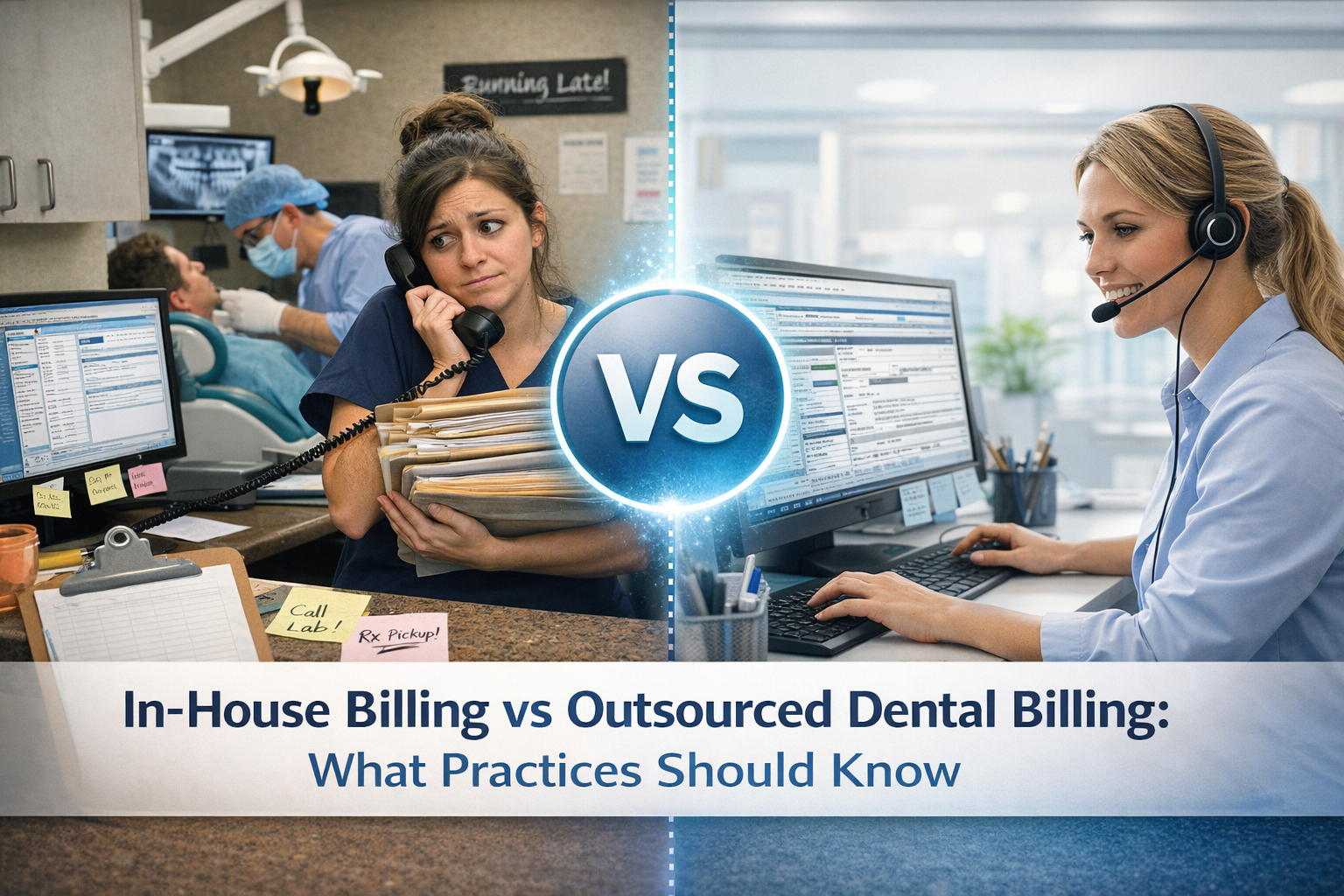
    In-House Billing vs Outsourced Dental Billing: What Practices Should Know

    Insurance billing plays a critical role in the financial health of a dental practice. Claims must be submitted correctly, follow-ups need to be consistent, and insurance payments must be interpreted accurately to maintain proper patient balances.

    For many practices, this responsibility falls on an in-house team member. However, as insurance processes become more complex, many offices are beginning to consider outsourced dental billing support.

    Understanding the differences between in-house billing and outsourced dental billing can help practices determine which approach best supports their workflow and financial goals.


    How In-House Billing Typically Works

    In many dental practices, billing responsibilities are handled by a front office team member. These individuals often manage several roles simultaneously, including:

    • patient check-in and scheduling
    • treatment coordination
    • answering phones
    • financial arrangements
    insurance claim submission and follow-up

    While this structure works for some practices, insurance billing can quickly become time-consuming. Claims that require additional documentation, appeals, or repeated follow-up calls may compete with the daily demands of the front desk.

    When this happens, insurance follow-up may unintentionally become delayed, allowing claims to age beyond 60 or 90 days.


    Common Challenges With In-House Billing

    Front office teams are essential to the patient experience, but insurance billing often requires dedicated time and focus.

    Some common challenges practices encounter with in-house billing include:

    Limited time for insurance follow-up
    When staff members are managing patient flow and administrative tasks, insurance calls and claim reviews may get pushed aside.

    Insurance rules and coordination complexities
    Topics like coordination of benefits, fee schedules, and insurance adjustments require a deep understanding of how plans process claims.

    Training and knowledge gaps
    Many billers learn insurance workflows informally, which can lead to inconsistent billing practices over time.

    Aging insurance claims
    Without consistent follow-up systems, claims can sit unpaid for extended periods, creating delays in revenue.


    What Outsourced Dental Billing Looks Like

    Outsourcing dental billing allows practices to work with a team that focuses specifically on insurance management.

    Rather than relying on one person within the office, an external billing partner manages tasks such as:

    • insurance claim submission
    • claim follow-up and status tracking
    • coordination of benefits calculations
    • appeals and resubmissions
    • payment posting support
    • identifying aging accounts

    Because billing teams focus exclusively on insurance processes, they often have the time and structure needed to maintain consistent follow-up on outstanding claims.


    Benefits of Outsourcing Dental Billing

    For many practices, outsourcing billing is less about replacing the front office and more about supporting the team with dedicated insurance expertise.

    Some of the benefits practices often experience include:

    More Consistent Claim Follow-Up

    Insurance follow-up requires persistence and organization. A dedicated billing team can ensure claims are reviewed and followed up on regularly so they do not quietly age without resolution.

    Reduced Administrative Burden

    Front office teams can focus on patient interactions, scheduling, and treatment coordination rather than spending hours navigating insurance phone systems.

    Greater Insurance Billing Expertise

    Billing professionals who work specifically with insurance claims often develop a deeper understanding of topics such as:

    • coordination of benefits calculations
    • insurance fee schedules
    • documentation requirements
    • appeal strategies

    Improved Visibility Into Insurance Aging

    With structured billing workflows, practices often gain better insight into their insurance aging reports and claim status.


    Is Outsourced Billing Right for Every Practice?

    Outsourcing billing is not the right solution for every office. Some practices have well-established internal billing teams and processes that work effectively.

    However, many offices find that as insurance requirements become more complex, having dedicated support for billing and claims management helps maintain consistent revenue flow.

    The decision often depends on factors such as:

    • claim volume
    • staffing availability
    • time spent on insurance follow-up
    • comfort level with insurance processes


    A Collaborative Approach

    Outsourced billing does not replace the role of a practice’s front office team. Instead, it can function as an extension of the practice, working alongside the office to ensure insurance claims are submitted accurately and followed up on consistently.

    When insurance workflows are organized and claims receive the attention they require, practices often experience fewer delays and clearer financial records.


    Final Thoughts

    Dental insurance billing continues to evolve, and the complexity of insurance rules can make consistent follow-up challenging for busy offices.

    Whether a practice chooses to manage billing internally or partner with a billing team, the most important factor is ensuring that claims receive the attention necessary to maintain healthy revenue cycles.

    For practices that are evaluating their current billing workflows, reviewing aging claims and follow-up systems can be a helpful first step.


    Steadfast Billing Solutions partners with dental practices to support insurance billing workflows, helping offices manage claims, follow-ups, and insurance processes with consistency and attention to detail.

    If you’re curious how your current billing process compares, we’re always happy to review insurance aging reports and provide insight into potential opportunities for improvement.