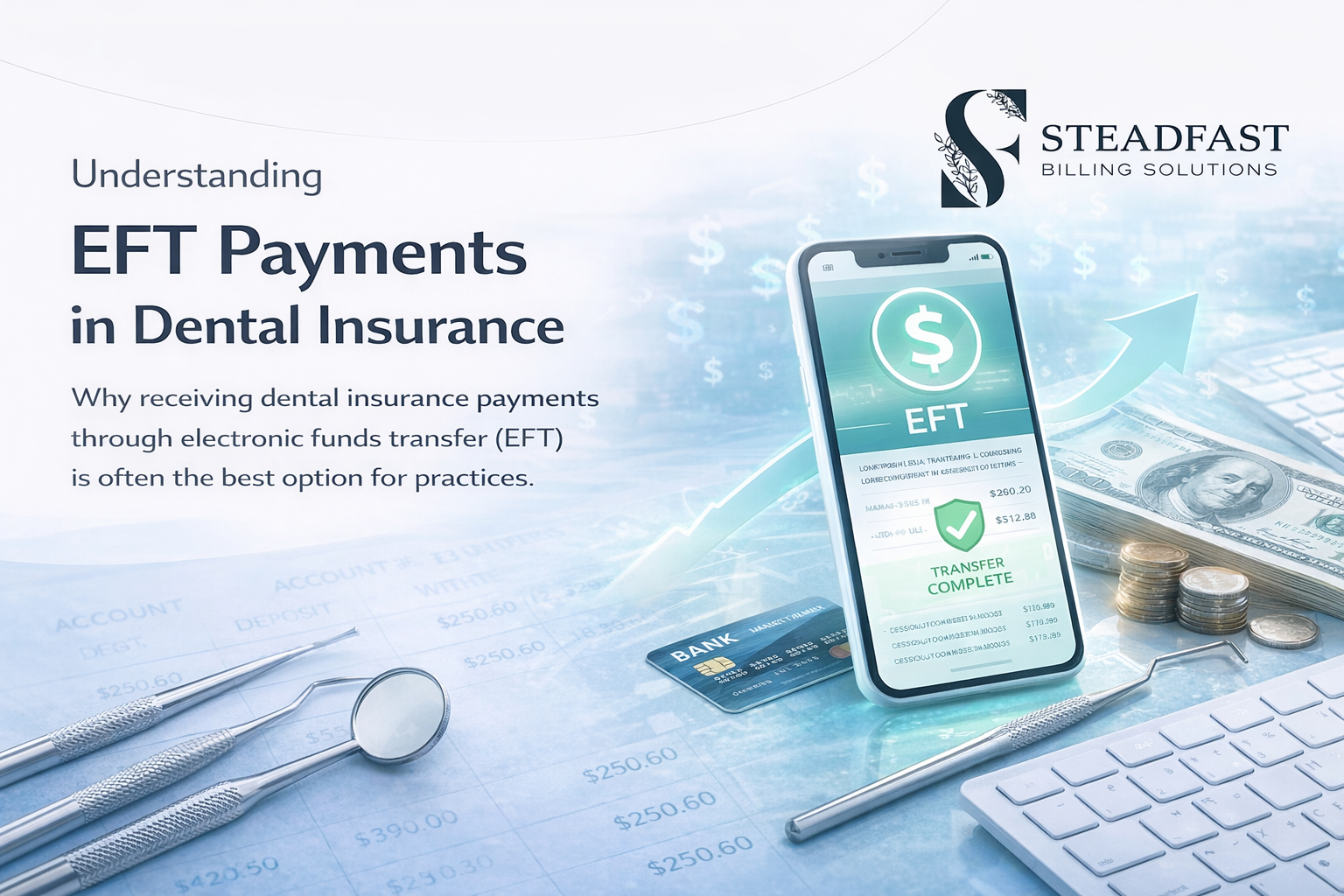
Dental insurance payments can be issued in several ways, including paper checks, virtual credit cards (VCC), and electronic funds transfer (EFT Payments).
Understanding the implications of each payment method is crucial for dental practices aiming to optimize their financial operations. In the following sections, we will delve deeper into the advantages of EFT, providing practical examples and insights into how these benefits can manifest in daily operations.
Moreover, let’s explore how EFT enhances the overall patient experience by ensuring that insurance claims are processed efficiently, leading to quicker turnaround times for reimbursements and less hassle for both staff and patients.
While all three methods are used across the industry, EFT is widely considered the most secure and efficient option for dental practices.
Beyond faster payments, EFT can also help reduce administrative work and lower the risk of internal financial issues.
By adopting EFT Payments, dental practices can enhance their operational efficiency and security.
Understanding the differences between these payment methods can help practices make better decisions about how they receive insurance reimbursements.
What Is EFT in Dental Insurance?
This not only saves time but also reduces the likelihood of errors associated with manual processing of checks or virtual card payments. The electronic nature of EFT minimizes human intervention, thereby enhancing accuracy.
Electronic Funds Transfer (EFT) is a modern banking process that allows insurance companies to deposit claim payments directly into a dental practice’s bank account, providing a seamless and efficient financial transaction method.
Instead of waiting for a check in the mail or manually processing a virtual credit card, the payment is transferred electronically and typically appears in the account within a few days of claim processing.
Additionally, EFT transactions can often be tracked in real-time, allowing practices to maintain accurate records and follow up on payments more effectively when needed.
Moreover, faster payment processes can lead to improved relationships with vendors and suppliers, as timely payments may enhance trust and negotiation power.
This is particularly important in a busy dental practice where cash flow is vital for meeting operational costs and investing in equipment and staff development.
Most dental insurers offer EFT enrollment through clearinghouses or services such as CAQH EnrollHub.
Why EFT Is Often the Best Option for Dental Practices
With the complexity of insurance reimbursements, having a streamlined process via EFT simplifies the reconciliation of payments, as these are often accompanied by detailed reports outlining the payments received.
By reducing the number of manual processes, practices can allocate their resources more effectively, allowing the administrative staff to focus on patient interactions and care rather than paperwork.
Faster Payments
Automated payment systems linked to EFT also allow for better forecasting of cash flow, enabling practices to make more informed financial decisions.
Paper checks must be printed, mailed, received, deposited, and cleared by the bank.
EFT payments skip several of these steps, allowing funds to be deposited directly into the practice’s account. This often results in faster access to funds and improved cash flow.
Reduced Administrative Work
Processing insurance checks requires staff to:
• Open mail
• Post payments manually
• Deposit checks
• Reconcile payments with EOBs
EFT payments simplify this process because the funds arrive electronically and are typically paired with electronic remittance advice (ERA) that can be imported into dental software.
This can save significant administrative time for front office teams.
Enhanced Financial Control
With EFT, practices can implement features that allow for better auditing and tracking of transactions, ensuring that every payment is accounted for and accurately reflected in the practice’s financial statements.
Additionally, this transparency can serve as a deterrent to potential internal fraud, as fewer touch points and more visible transactions make misconduct more difficult.
A dental practice that previously experienced issues with lost checks could utilize EFT to ensure that funds are securely deposited, drastically reducing the chance for error or misappropriation.
Virtual credit cards may also complicate the reimbursement process, often requiring additional steps for manual processing that could inadvertently lead to missed payments.
This complexity often leads to frustration among staff who have to navigate both the virtual card systems and traditional payment methods, further emphasizing the efficiency of EFT.
Paper checks can be delayed in the mail, lost in transit, or occasionally misdirected.
Practices should consider educating their staff on the benefits of EFT over VCC, ensuring that everyone understands the financial implications of their payment choices.
Because EFT payments move electronically between the insurance company and the practice’s bank, there is less risk of payment delays due to mailing issues.
Reduced Risk of Internal Embezzlement
One of the less discussed advantages of EFT payments is the additional financial transparency they provide.
When insurance checks arrive by mail, they must be handled by staff before being deposited. In some situations, this can create opportunities for payments to be diverted or mishandled.
Ultimately, the transition to EFT can lead to a smoother financial operation, with fewer headaches related to payment discrepancies and a more streamlined process for handling claims.
Because EFT payments are deposited directly into the practice’s bank account, they reduce the number of touchpoints where funds are handled manually.
For practices looking to enhance their billing processes, integrating EFT is a step forward that can save time, reduce costs, and improve overall financial health.
In conclusion, as the dental industry continues to evolve, adopting modern payment methods like EFT is not merely a trend but a necessity for practices aiming to thrive in a competitive landscape.
This can help practices maintain stronger financial controls and reduce opportunities for internal misappropriation.
What About Virtual Credit Card Payments?
Some insurance companies issue payments through virtual credit cards (VCC).
With this method, the practice receives a credit card number that must be manually processed like a card payment.
While VCC payments may arrive faster than paper checks, they often come with processing fees similar to merchant card fees.
These fees can reduce the total reimbursement the practice receives for insurance claims.
For this reason, many practices prefer to request EFT instead of virtual credit card payments whenever possible.
The Bottom Line
Electronic Funds Transfer offers several advantages over traditional insurance payment methods.
By enrolling in EFT, dental practices can often benefit from:
• Faster insurance payments
• Reduced administrative workload
• Improved payment tracking
• Lower risk of lost checks
• Reduced opportunities for financial misconduct
For many practices, moving toward EFT payments is a simple change that can improve both efficiency and financial transparency.
Need Help Optimizing Your Dental Billing Process?
Managing insurance payments, claim follow-ups, and revenue cycle processes can take significant time away from patient care.
Steadfast Billing Solutions helps dental practices streamline their billing systems and improve insurance reimbursement workflows.
Learn more at:
www.steadfastbilling.com
Phone:
361-273-0004
Leave a Reply