
Introduction
In the rapidly evolving landscape of dental practices, efficiency and financial viability are paramount. One significant aspect that can contribute to the operational effectiveness of a dental office is the management of insurance billing. This article explores the impact of outsourcing dental insurance billing, detailing its benefits, including cost savings, improved cash flow, enhanced focus on patient care, streamlined processes, and reduced administrative burdens. By understanding these advantages, dental professionals can make informed decisions to optimize their practice operations.
Cost Savings
Reduction in Overhead Expenses
Outsourcing dental insurance billing can lead to notable reductions in overhead costs for practices. By outsourcing, dental offices can eliminate expenses associated with hiring, training, and retaining in-house billing staff. This approach also reduces costs related to employee benefits, office space for additional personnel, and the necessary technology for billing management. With fewer resources allocated to billing, practices can redirect their finances towards enhancing patient care or investing in the latest dental technologies.
Additionally, outsourced billing companies often operate on a performance-based model, meaning practices only pay for the services rendered. This can lead to more predictable budgeting and financial planning as opposed to the unpredictable costs associated with hiring full-time employees. The overall financial efficiency gained from outsourcing can significantly enhance the practice’s bottom line.
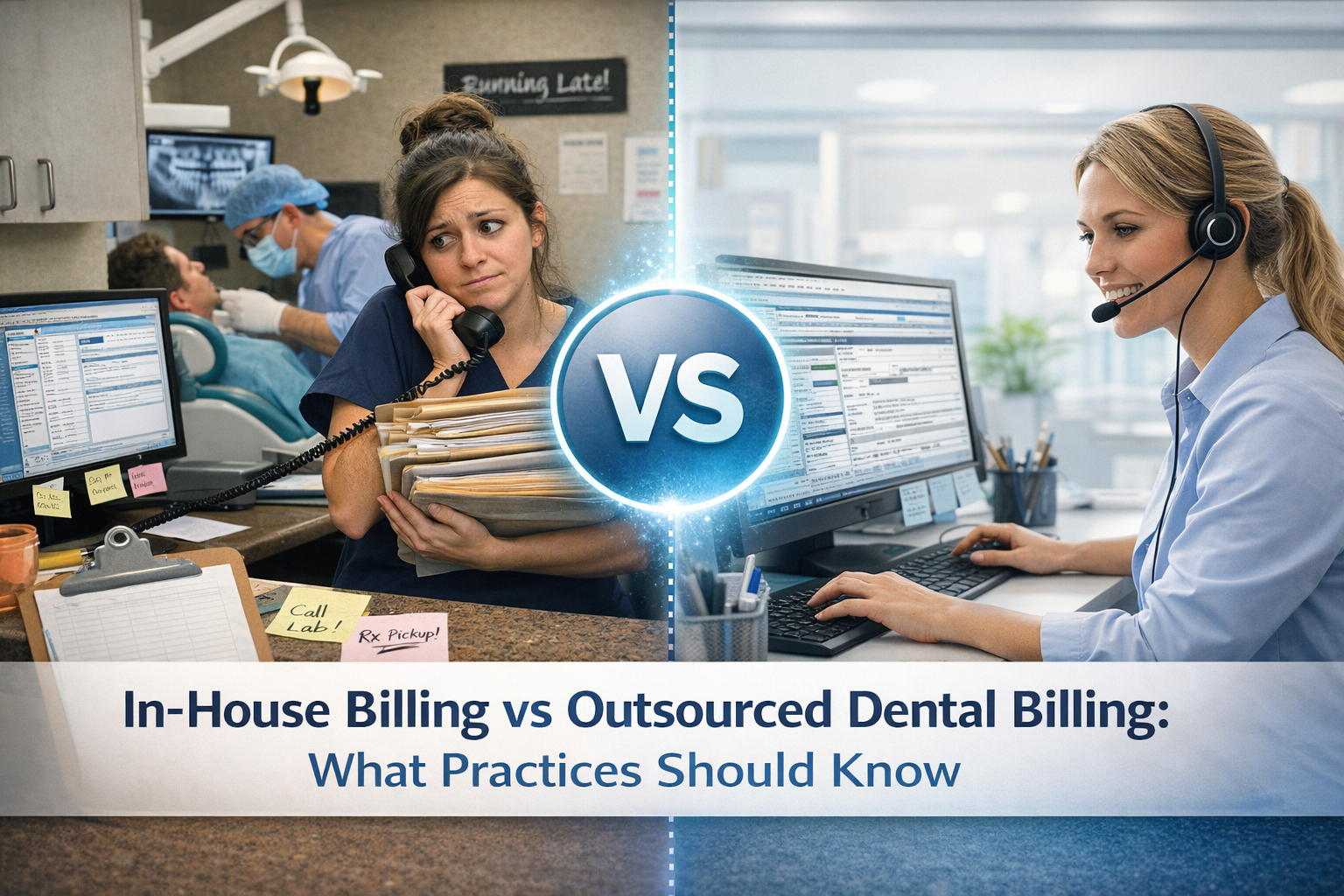
Comparison of In-House vs. Outsourced Billing Costs
When comparing in-house and outsourced billing costs, it is essential to consider not just the immediate financial implications but also the long-term impacts on practice revenue. In-house billing may seem cost-effective at first glance, but hidden costs such as training, employee turnover, and compliance issues can accumulate over time. In contrast, outsourced services typically have established processes and experienced staff who can manage billing more efficiently, potentially improving claim acceptance rates and reducing denials.
A detailed analysis of billing costs can reveal that outsourced services can be a more economical choice in the long run. By examining metrics such as claim acceptance rates, the speed of payments, and the cost of managing in-house staff, dental practices can make data-driven decisions about outsourcing their billing processes.
Improved Cash Flow
Faster Claim Processing Times
One of the most significant advantages of outsourcing dental billing is the acceleration of claim processing times. Specialized billing services are equipped with the knowledge and technology to submit claims promptly and correctly. This swiftness leads to quicker reimbursements and, consequently, a healthier cash flow for the practice. Unlike in-house billing, where staff may be diverted by other responsibilities or overwhelmed by workload, outsourced teams focus exclusively on claims, enabling them to maximize efficiency.
Moreover, professional billing services are adept at handling follow-ups and appeals, ensuring that no claim is left unresolved. This proactive approach results in significantly shorter accounts receivable cycles, which can greatly enhance the financial health of a dental practice.
Optimized Payment Cycles
Outsourcing billing can also optimize payment cycles, ensuring that practices receive payments in a timely manner. With professional billing companies managing the complex nature of insurance claims, practices often experience fewer delays and denials. These companies utilize their expertise to ensure that claims are submitted correctly the first time, which reduces the chances of payment delays caused by errors or misunderstandings.
The effect of improved payment cycles can be profound. A more predictable revenue stream allows practices to maintain operational stability, invest in new equipment, and provide better services to patients. This aspect not only supports the financial side of the practice but also helps in sustaining a high level of patient care.
Enhanced Focus on Patient Care
Shifting Resources to Clinical Activities
Outsourcing dental billing effectively frees up time and resources for dental professionals, enabling them to concentrate on clinical activities rather than administrative tasks. By relieving staff from the complexities of billing, the practice can allocate more time to patient care, enhancing overall service quality. This shift can lead to improved patient outcomes and higher satisfaction rates, fostering patient loyalty and generating positive referrals.
Furthermore, with a dedicated focus on clinical responsibilities, dental teams can invest additional energy in preventative care, patient education, and creating a welcoming environment. The result is a more engaged staff and a better experience for patients, which is crucial in today’s competitive healthcare environment.
Improved Patient Satisfaction
Patient satisfaction is increasingly linked to the operational efficiency of a dental practice. With billing processes handled externally, dental offices can minimize the time spent on administrative issues, allowing for more direct patient interaction. Patients appreciate a seamless experience, from scheduling appointments to processing payments. When billing is simplified and clarified, it enhances the patient experience significantly.
Moreover, the reduced likelihood of billing errors or unexpected charges due to professional management leads to fewer complaints and disputes, further enhancing patient trust and satisfaction. Satisfied patients are more likely to return for future services and recommend the practice to others, which is invaluable for community growth and reputation.
Streamlined Billing Processes
Automation of Routine Tasks
Outsourcing dental billing often involves the implementation of sophisticated software solutions that automate routine billing tasks. Automation minimizes the chances of human error while speeding up processes like claim submission, payment tracking, and patient invoicing. By integrating automation into billing, practices can ensure accuracy, which directly contributes to improved cash flow and reduced administrative burdens.
The streamlined processes allow practice managers to oversee billing operations more efficiently, focusing on strategy and growth rather than day-to-day administrative issues. Moreover, with automated systems, dental practices can easily generate reports on billing performance, providing valuable insights for ongoing financial assessments.
Consistency in Billing Procedures
Consistency in billing procedures is crucial for maintaining a professional image and ensuring compliance with regulations. Outsourced billing services bring standardized processes that ensure every claim is handled uniformly. This consistency helps in minimizing discrepancies and maintaining accurate records, which is essential for audits and compliance with dental regulations. Dental claims must follow standardized formats, such as those outlined by the American Dental Association.
Additionally, a uniform billing process can enhance communication among staff members and with patients. Clear procedures help in setting patient expectations regarding payment timelines and insurance processes, leading to a more transparent and satisfactory experience for all parties involved.
Access to Expertise
Utilizing Specialized Knowledge in Dental Billing
Dental billing services often employ professionals who specialize in dental insurance processes and regulations. This expertise can be invaluable, as these individuals understand the nuances of dental billing, from coding to the intricacies of various insurance policies. By outsourcing, practices gain access to this specialized knowledge without incurring the costs associated with hiring in-house experts.
Additionally, specialized billing services can offer insights into industry best practices and emerging trends that an in-house team might overlook. This ongoing education ensures that practices remain competitive and compliant in an ever-changing healthcare landscape.
Staying Updated on Regulations and Compliance
Dental billing is subject to a myriad of regulations that can change frequently. Outsourced billing companies are adept at navigating these changes, ensuring that practices remain compliant with HIPAA and insurance company requirements. Compliance is not just about avoiding penalties; it also enhances trust and credibility with patients and partners.
By staying informed about regulatory updates and implementing necessary adjustments, outsourced billing services can help practices mitigate risks associated with non-compliance while focusing on delivering high-quality care to patients.
Reduced Administrative Burden
Minimizing Staff Workload
The administrative workload in a dental practice can be overwhelming, especially when it comes to managing insurance billing. By outsourcing this aspect, practices can significantly minimize the workload on their staff. Employees can focus on their core responsibilities, such as patient care and practice management, rather than being burdened by the complexities of billing.
This reduction in administrative burden can lead to higher job satisfaction among staff, as they can engage more fully with their roles without being distracted by billing issues. A more motivated workforce often translates into better patient interactions and enhanced performance across the board.
Enhancing Operational Efficiency
Outsourcing billing not only alleviates individual workloads but also enhances overall operational efficiency within the practice. With a dedicated team handling billing, practices can streamline their workflows, reduce bottlenecks, and optimize resource allocation. This improved efficiency can lead to better patient management, timely follow-ups, and increased productivity across all areas of practice.
By investing in an outsourced billing service, dental practices can achieve a level of operational efficiency that may be difficult to attain with in-house systems alone. The combination of specialized knowledge and reduced administrative burdens can lead to a more profitable practice that is well-positioned for growth.
Best Practices for Implementing Outsourced Dental Billing
Selecting the Right Dental Billing Services
The choice of an outsourced billing service is critical to the success of the transition. Practices should seek companies with a proven track record in dental billing and a deep understanding of the specific challenges faced by dental practices. It is advisable to evaluate potential partners based on their experience, client testimonials, and the technologies they employ.
Furthermore, practices should assess the level of customer support offered by prospective billing companies. Effective communication is crucial for the successful management of billing operations, so a service that prioritizes client engagement and responsiveness will likely yield better results.
Integrating Dental Insurance Claims Management Systems
Successful outsourcing of dental billing requires an integrated approach to manage insurance claims effectively. Practices should consider implementing a robust dental insurance claims management system that complements the billing service. This integration allows for seamless communication between the practice and the billing company, ensuring that all parties have access to real-time data on claims status and patient accounts.
Moreover, a well-integrated system can facilitate better tracking of claim denials and appeals, alerting the billing service to issues that need immediate attention. This proactive management can further streamline billing operations and enhance overall efficiency.
Training Staff on New Processes
Transitioning to outsourced billing entails changes in workflows and processes within the practice. Therefore, it is essential to provide comprehensive training to staff members on new billing procedures and technologies. This training ensures that everyone in the practice understands their roles and responsibilities in the new system, facilitating a smoother transition.
In addition, ongoing training and feedback sessions can help staff adapt to changes and continuously improve the integration of outsourced billing services. A well-informed team is better equipped to handle patient inquiries regarding billing, further enhancing the patient experience.
Conclusion
Outsourcing dental insurance billing presents numerous advantages for dental practices, including cost savings, improved cash flow, enhanced focus on patient care, streamlined processes, and access to specialized expertise. By shifting the burdens of billing management to external professionals, dental offices can minimize administrative burdens and optimize their operations.
As the healthcare landscape continues to evolve, dental practices must adapt to remain competitive and financially viable. The implementation of outsourced billing services not only supports operational efficiency but also fosters an environment focused on providing exceptional patient care. By taking advantage of these benefits, dental professionals can position their practices for long-term success in a challenging industry.
“How to Know If Your Billing Is Costing You Money”
Keep it simple:
- Claims over 30 days with no follow-up
- Frequent write-offs
- Inconsistent adjustments
- Confusing reports
FAQs
1. What are the primary benefits of outsourcing dental billing?
Outsourcing dental billing can lead to cost savings, improved cash flow, enhanced focus on patient care, streamlined processes, and reduced administrative burdens.
2. How does outsourcing affect a dental practice’s cash flow?
Outsourcing can improve cash flow by accelerating claim processing times and optimizing payment cycles, leading to quicker reimbursements.
3. What should I consider when selecting a dental billing service?
Consider the company’s experience, client testimonials, offered technologies, and level of customer support when choosing a billing service.
4. Will outsourcing billing services impact patient care?
Outsourcing billing allows dental professionals to focus more on patient care, improving overall patient satisfaction and outcomes.
5. How can I ensure a smooth transition to outsourced billing?
Implement comprehensive training for staff on new processes and integrate effective dental insurance claims management systems to facilitate a seamless transition.