Tag: Dental Insurance Verification

  • Dental Bone Graft CDT Codes: D7953 vs D7950 vs D6104 Explained

    Dental Bone Graft CDT Codes: D7953 vs D7950 vs D6104 Explained

    Dental bone graft CDT codes can get confusing fast—especially when procedures happen at different stages of treatment.

    Let’s be honest…

    Most denials we see here aren’t because the procedure was wrong.

    It’s because the wrong code was used—or the situation wasn’t clearly understood when it was billed.

    And this is where things start to slip.


    Understanding Bone Graft CDT Codes in Implant Cases

    The biggest difference between these comes down to one thing:

    👉 Timing and purpose

    Not just what was done…

    But when it was done and why.


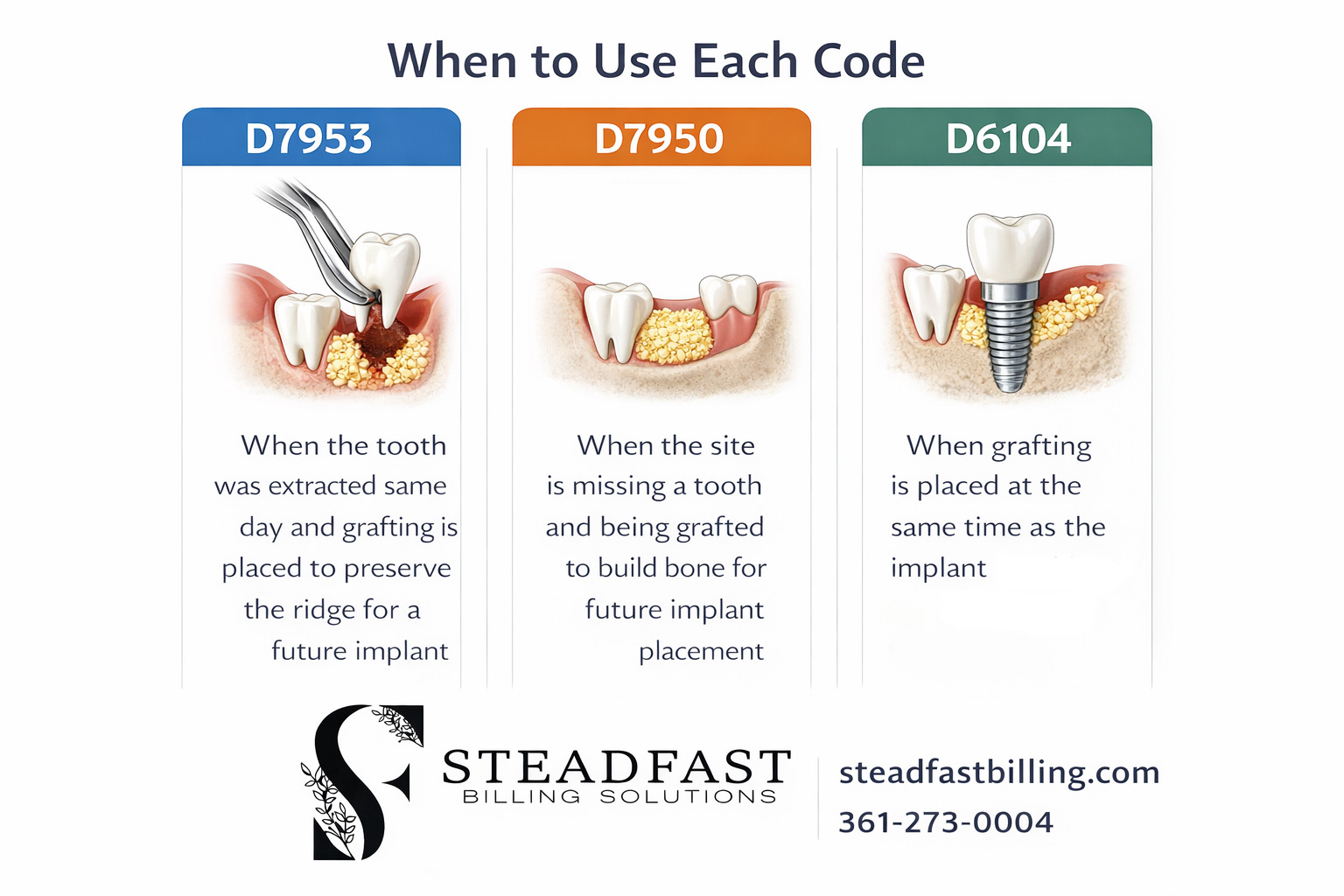
    D7953 — Ridge Preservation at Time of Extraction

    D7953 is used when this procedure is performed at the same time as a tooth extraction.

    The goal is to preserve the site so it’s ready for future placement.

    When to Use It

    • Same day as extraction
    • Site preservation for future treatment
    • Submitted with extraction

    What Trips Offices Up

    Some insurance plans tie this directly to future treatment.

    So if there’s no pre-determination—or that future service gets denied…

    👉 this may be denied too


    D7950 — Used for Ridge Augmentation or Defect Repair

    D7950 applies when the procedure is done to:

    • Build up the ridge
    • Repair defects
    • Prepare an area for future restoration

    And it’s not tied to an extraction site.

    When to Use It

    • Separate procedure
    • More extensive cases
    • Site development for future needs

    Common Area of Confusion

    A big one we see?

    Primary teeth.

    If a baby tooth is extracted and additional work is done, it’s easy to assume it should be tied to that extraction.

    But if the goal is to support the future permanent tooth site…

    👉 it’s often considered separate

    Which is why D7950 is typically the correct code in these situations.


    D6104 — Performed at Time of Implant Placement

    D6104 is used when this procedure is done during placement of an implant.

    This usually happens when:

    • Additional support is needed
    • There are defects around the area

    When to Use It

    • Same time as placement
    • Supports stability
    • Requires clear documentation

    Key Differences Between D7953, D7950, and D6104

    CodeWhen It’s UsedTiming
    D7953Ridge preservationAt time of extraction
    D7950Ridge augmentation or defect repairSeparate procedure
    D6104Procedure performed with implant placementAt time of implant placement

    👉 If you get the timing wrong… you usually get the claim wrong.


    Why Correct Coding Impacts Your Revenue

    This isn’t just about accuracy.

    It directly affects your collections.

    Using the correct code helps prevent:

    • Denials that shouldn’t happen
    • Delayed payments
    • Rework and resubmissions
    • Write-offs that could have been avoided

    What Insurance Actually Looks For

    Most carriers aren’t just looking at the code.

    They’re looking for:

    • Clinical necessity
    • Clear timing
    • Supporting documentation (radiographs, notes)

    If that’s missing—or unclear…

    They default to denial.


    The Bigger Issue Behind the Scenes

    Your team is busy.

    They’re juggling:

    • patients
    • phones
    • schedules
    • and billing

    So decisions get made quickly.

    Sometimes based on habit.

    Sometimes based on assumption.

    And not because they don’t care…

    But because they don’t always have the time to slow down and think through the details.


    The Bottom Line

    These procedures play a big role in long-term success.

    But billing them correctly comes down to understanding:

    👉 when the procedure was done
    👉 what it was meant to support

    That’s what determines the right code.

    And when that part is clear…

    Everything else gets easier.


    Need Help With Dental Billing?

    If coding and billing around these procedures feels inconsistent…

    We offer a free billing analysis so you can see what’s actually happening behind the scenes—what’s being missed, and where things can be cleaned up.

    No pressure.

    Just clarity.

    Dental insurance billing can quickly become complicated, especially when procedures involve multiple codes and documentation requirements.

    Steadfast Billing Solutions helps dental practices manage insurance claims, follow-ups, and revenue cycle processes so offices can focus on patient care.

    Learn more at:
    www.steadfastbilling.com

    Phone:
    361-273-0004


  • Understanding Non-Covered Benefits in Dental Insurance: A Common Source of Billing Confusion

    Understanding Non-Covered Benefits in Dental Insurance: A Common Source of Billing Confusion

    Dental insurance billing can be complicated, and one area that often causes confusion for dental offices is non-covered benefits. Misunderstanding how these benefits work can lead to incorrect adjustments, lost revenue, and inaccurate patient balances.

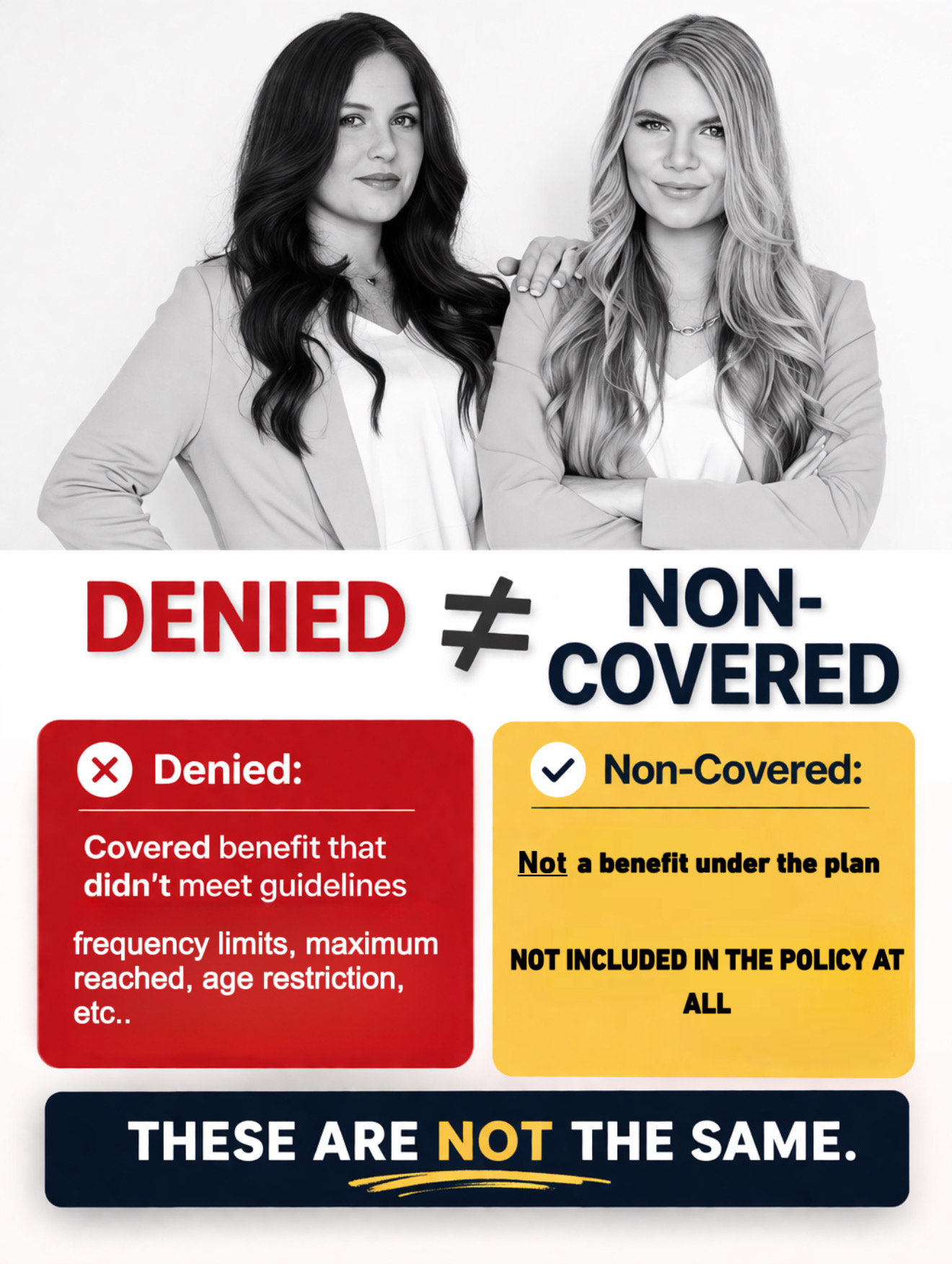
    Many offices assume that if an insurance company does not pay for a procedure, it must automatically be considered a non-covered benefit. In reality, that is not always the case. Understanding the difference between a service that is truly not covered and a service that is covered just simply not payable is essential for accurate billing.


    What Is a True Non-Covered Benefit?

    This refers to a dental procedure that is never covered under the patient’s insurance policy. The service simply does not exist within the plan’s list of covered benefits.

    When verifying insurance coverage, the insurance company may clearly state that a procedure is “not a covered benefit.” In these situations, the service is outside the scope of the patient’s policy entirely.

    In many states, when a service is truly not covered under the policy, dental practices are generally allowed to charge the full office fee rather than being restricted to the contracted in-network fee schedule.

    Understanding this distinction is important because incorrectly applying a contractual adjustment in these situations can result in unnecessary revenue loss for the practice.


    When a Procedure Is Covered but Not Payable

    One of the most common billing mistakes occurs when offices assume that any unpaid claim automatically qualifies as a non-covered benefit.

    However, if a procedure would normally be covered under the patient’s insurance policy but is denied due to plan limitations or guidelines, it is still considered a covered benefit, even though the insurance company did not issue payment.

    Common examples include:

    • Frequency limitations (such as exams or cleanings performed too soon)
    • Plan waiting periods
    • Missing documentation or required attachments
    • Plan-specific coverage guidelines

    In these situations, the procedure remains part of the plan’s covered services, even though payment was denied for that particular claim.

    Because the service is still considered a covered benefit, participating providers are typically required to honor the contracted in-network fee schedule, meaning the patient must receive the negotiated insurance discount.


    Why This Distinction Matters

    Failing to correctly identify whether a procedure is truly not covered or a covered service that is simply not payable can create significant billing problems.

    Some of the most common issues we see include:

    • Incorrect contractual adjustments
    • Loss of revenue due to unnecessary fee reductions
    • Inaccurate patient balances
    • Confusion when explaining charges to patients

    Over time, these small errors can quietly add up and impact the financial health of a practice.


    The Importance of Understanding Insurance Contracts

    Every dental insurance participation agreement outlines how providers must handle billing for covered and non-covered services.

    Because policies vary between carriers and states, correctly interpreting insurance responses requires careful review of:

    • explanation of benefits (EOBs)
    • participation agreements
    • plan benefit structures
    • state guidelines regarding non-covered services

    Without a clear understanding of these details, billing errors can easily occur.


    Clear Communication With Patients

    When procedures are not paid by insurance, patients often assume the office made an error. Being able to clearly explain why a service was not covered helps maintain transparency and trust.

    Dental teams should take the time to:

    • verify benefits when possible before treatment
    • review EOB explanations carefully
    • explain the difference between non-covered benefits and plan limitations

    Providing clear financial explanations helps patients better understand their insurance coverage and prevents confusion later.


    Final Thoughts

    Dental insurance billing is filled with small details that can have a significant impact on practice revenue. The difference between a true non-covered benefit and a covered procedure that simply did not pay may seem minor, but it can dramatically affect how fees and adjustments should be applied.

    Unfortunately, this distinction is one of the most commonly misunderstood areas of dental billing.

    At Steadfast Billing Solutions, we frequently review accounts where incorrect adjustments were made simply because denied vs not a covered benefit rules were misunderstood. These mistakes often lead to lost revenue and unnecessary confusion for both practices and patients.

    When insurance billing is handled with careful attention to plan details, participation agreements, and fee schedule rules, practices can avoid these issues and maintain accurate financial records.

    If your office has ever questioned whether adjustments are being applied correctly—or if you simply want a second set of eyes on your billing processes—a professional billing review can often reveal opportunities to improve accuracy and protect revenue.

    Steadfast Billing Solutions partners with dental practices to ensure claims, adjustments, and insurance workflows are handled correctly so offices can focus on what matters most: providing exceptional patient care.