When it comes to D7953 vs D7950, understanding dental bone graft CDT codes can get confusing fast.
Let’s be honest…
Most denials we see here aren’t because the procedure was wrong.
It’s because the wrong code was used—or the situation wasn’t clearly understood when it was billed.
And this is where things start to slip.
Table of Contents
Understanding D7953 vs D7950 in Implant Cases
The biggest difference between these comes down to one thing:
👉 Timing and purpose
Not just what was done…
But when it was done and why.
D7953: Understanding the Ridge Preservation CDT Code
Using the correct CDT code for socket preservation is essential for clean claims
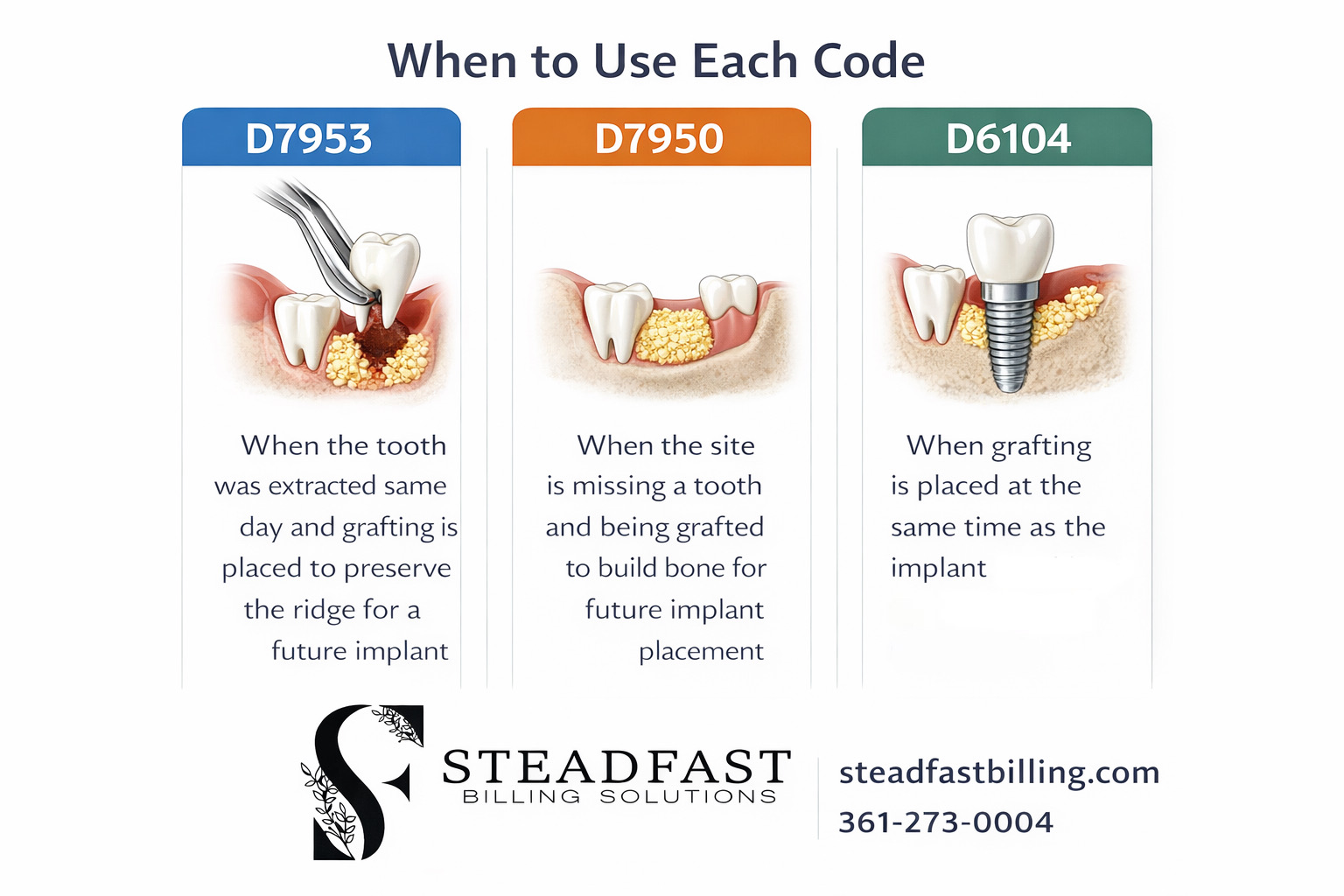
D7953 is used when this procedure is performed at the same time as a tooth extraction.
The goal is to preserve the site so it’s ready for future placement.
When to Use D7953 for Ridge Preservation
- Same day as extraction
- Site preservation for future treatment
- Submitted with extraction
What Trips Offices Up
Some insurance plans tie this directly to future treatment.
So if there’s no pre-determination—or that future service gets denied…
👉 this may be denied too
Misunderstanding the timing of this code is a primary reason for dental insurance denials for bone grafts, leading to unnecessary revenue loss.
D7950: Coding for Ridge Augmentation and Bone Defects
D7950 applies when the procedure is done to:
- Build up the ridge
- Repair defects
- Prepare an area for future restoration
And it’s not tied to an extraction site.
When to D7950 for Ridge Augmentation
- Separate procedure
- More extensive cases
- Site development for future needs
Common Area of Confusion
A big one we see?
Primary teeth.
If a baby tooth is extracted and additional work is done, it’s easy to assume it should be tied to that extraction.
But if the goal is to support the future permanent tooth site…
👉 it’s often considered separate
Which is why D7950 is typically the correct code in these situations. Miscoding these as tied to the extraction is a frequent reason for dental insurance denials for bone grafts.
D6104: Bone Grafting for Dental Implant Billing
D6104 is used when this procedure is done during placement of an implant.
This usually happens when:
- Additional support is needed
- There are defects around the area
When to Use It
- Same time as placement
- Supports stability
- Requires clear documentation
Key Differences: D7953 vs D7950 and D6104
| Code | When It’s Used | Timing |
|---|---|---|
| D7953 | Ridge preservation | At time of extraction |
| D7950 | Ridge augmentation or defect repair | Separate procedure |
| D6104 | Procedure performed with implant placement | At time of implant placement |
👉 If you get the timing wrong… you usually get the claim wrong.
How to Avoid Dental Insurance Denials for Bone Grafts
This isn’t just about accuracy.
It directly affects your collections.
Using the correct code helps prevent:
- Denials that shouldn’t happen
- Delayed payments
- Rework and resubmissions
- Write-offs that could have been avoided.
Many practices find that outsourced dental billing helps eliminate these coding errors before they hit the insurance carrier.
What Insurance Actually Looks For
Most carriers aren’t just looking at the code.
They’re looking for:
- Clinical necessity
- Clear timing
- Supporting documentation (radiographs, notes)
If that’s missing—or unclear…
They default to denial.
Just like with a dental excision claim narrative, providing the right story to the insurance company is the difference between a check and a denial. Click here to learn about how to write a dental excision claim narrative.
The Bigger Issue Behind the Scenes
Your team is busy.
They’re juggling:
- patients
- phones
- schedules
- and billing
So decisions get made quickly.
Sometimes based on habit.
Sometimes based on assumption.
And not because they don’t care…
But because they don’t always have the time to slow down and think through the details.
The Bottom Line
These procedures play a big role in long-term success.
But billing them correctly comes down to understanding:
👉 when the procedure was done
👉 what it was meant to support
That’s what determines the right code.
And when that part is clear…
Everything else gets easier.
Understanding these codes is just one part of the puzzle; managing non-covered benefits in dental billing ensures your patients are never surprised by their balance.
Need Help With Dental Billing?
If coding and billing around these procedures feels inconsistent…
We offer a free billing analysis so you can see what’s actually happening behind the scenes—what’s being missed, and where things can be cleaned up.
No pressure.
Just clarity.
Dental insurance billing can quickly become complicated, especially when procedures involve multiple codes and documentation requirements.
Steadfast Billing Solutions helps dental practices manage insurance claims, follow-ups, and revenue cycle processes so offices can focus on patient care.
Learn more at:
www.steadfastbilling.com
Phone:
361-273-0004



Leave a Reply